
Loft Conversion Ideas for Victorian & Edwardian Homes in Canterbury
Canterbury’s Victorian and Edwardian homes are among the most desirable properties in Kent. Built between the 1840s and 1910s, these period houses offer generous proportions, characterful features, and something many modern homes lack: substantial roof spaces ripe for conversion.
If you own a Victorian terrace in St Dunstan’s, an Edwardian semi in Wincheap, or a period property in one of Canterbury’s sought-after residential streets, your loft likely holds untapped potential. Converting that dusty storage space into a usable room could add a bedroom, home office, or bathroom without sacrificing garden space or extending your property’s footprint.
This guide explores loft conversion ideas specifically suited to Canterbury’s period housing stock, covering what works, what to consider, and how to make the most of your home’s original character.
Why Canterbury’s Period Homes Suit Loft Conversions
Victorian and Edwardian builders constructed homes with steep roof pitches and substantial roof voids. This wasn’t accidental—coal fires needed good chimney draw, and steeper roofs shed rain more effectively. The happy result for modern homeowners is roof spaces with genuine conversion potential.
Properties in areas like Oaten Hill, St Stephen’s, and the older streets around Canterbury West station typically feature:
- Steep roof pitches (often 40-45 degrees) providing good standing headroom
- Solid timber roof structures that can be adapted or reinforced
- Generous floor plates giving usable room dimensions once converted
- High ceilings on lower floors, meaning a loft room won’t feel cramped by comparison
Compare this to a 1970s or 1980s house with shallow trussed rafters and you’ll understand why period properties offer far more conversion potential.
Understanding Your Roof Structure
Before exploring design ideas, it helps to understand what you’re working with. Canterbury’s Victorian and Edwardian homes typically have one of two roof structures:
Cut Roof (Traditional)
Most pre-1960s homes feature cut roofs with individual rafters, purlins, and ridge boards. These roofs use larger timbers spaced further apart, leaving more usable space between structural elements. Cut roofs are generally easier to convert because the structure can be adapted—steel beams can replace load-bearing timbers, and dormers can be added relatively straightforwardly.
Trussed Roof
Some later Edwardian properties and homes that have had roof replacements may feature trussed rafters. These W-shaped frames are efficient but fill the roof void with diagonal timbers. Converting a trussed roof is possible but typically more complex and costly, often requiring the entire roof structure to be rebuilt.
A builder experienced with Canterbury’s period housing stock can assess your roof structure during an initial survey and advise on conversion feasibility.
Loft Conversion Types Suited to Period Properties
Not every conversion type suits every property. The right choice depends on your roof structure, available headroom, planning constraints, and what you want to achieve.
Velux (Roof Light) Conversion
The simplest and most affordable option, a Velux conversion adds roof windows to an existing roof slope without altering the roofline. This works well for Canterbury’s Victorian terraces and semis where the existing roof space already provides adequate headroom.
A Velux conversion typically falls under permitted development, avoiding the need for planning permission. It’s ideal for creating a guest bedroom, home office, or teenager’s retreat where maximising floor space isn’t the priority.
Homes in St Dunstan’s conservation area or properties close to Canterbury Cathedral may face additional restrictions on roof windows visible from public viewpoints—something to check before committing to this approach.
Dormer Conversion
Dormers extend outward from the roof slope, creating vertical walls and significantly increasing usable floor space. For Canterbury’s Victorian and Edwardian homes, dormers often make the difference between a cramped loft room and a genuinely comfortable living space.
Rear dormers on terraced properties typically fall under permitted development, though there are size limits. A flat-roofed box dormer maximises internal space, while a pitched-roof dormer may suit properties where appearance matters—particularly visible side elevations.
Properties in Wincheap, Nunnery Fields, and along the Old Dover Road often suit rear dormer conversions, adding substantial master bedrooms with en-suites without affecting the street-facing roofscape.
L-Shaped Dormer
Where a Victorian or Edwardian property has a rear addition (common in Canterbury’s terraces), an L-shaped dormer can extend across both the main roof and the outrigger roof. This creates a larger, more versatile space—potentially room for a bedroom plus en-suite, or a bedroom plus dressing area.
L-shaped dormers require careful structural design but can transform an awkward roof layout into a highly functional living space.
Hip-to-Gable Conversion
Many Edwardian semis in Canterbury feature hipped roofs—where the roof slopes inward on all sides rather than having vertical gable ends. While attractive externally, hipped roofs reduce usable loft space considerably.
A hip-to-gable conversion extends the roof structure to create a vertical gable wall, recovering the lost space. Combined with a rear dormer, this can roughly double the usable area compared to the original hipped layout.
This conversion type usually requires planning permission as it changes the roofline. Properties in conservation areas may face restrictions, though sympathetic designs using matching materials can gain approval.
Design Ideas for Period Loft Conversions
Master Bedroom Suite
The most popular conversion creates a master bedroom with en-suite bathroom, freeing up space on lower floors. In a Canterbury Victorian terrace, this might mean:
- A king-size bedroom area under the main roof slope
- En-suite bathroom positioned where headroom is lowest (showers and toilets need less ceiling height than living areas)
- Built-in wardrobes utilising eaves space that would otherwise be wasted
- Original exposed brickwork of the chimney breast as a feature
Home Office
Remote working has transformed how Canterbury residents use their homes. A loft office offers separation from household distractions without losing garden or living space. Consider:
- Positioning the desk to benefit from natural light through roof windows
- Built-in shelving and storage along the eaves
- Good broadband connectivity—run ethernet cable during the conversion rather than relying on WiFi through multiple floors
- Acoustic insulation to minimise noise transfer to rooms below
Children’s Bedroom or Playroom
Loft rooms suit older children who’ll appreciate the independence of their own floor. Design considerations include:
- Safe, comfortable staircase access (not a ladder or steep ship’s ladder)
- Adequate natural light and ventilation
- Sufficient headroom throughout—building regulations require minimum heights
- Fire safety provisions including protected escape routes
Guest Suite
A self-contained loft guest suite gives visitors privacy while keeping family life undisturbed. This might include:
- Bedroom with en-suite shower room
- Small kitchenette area (kettle, microwave, mini fridge)
- Separate entrance via the main staircase but with its own landing
Bathroom Addition
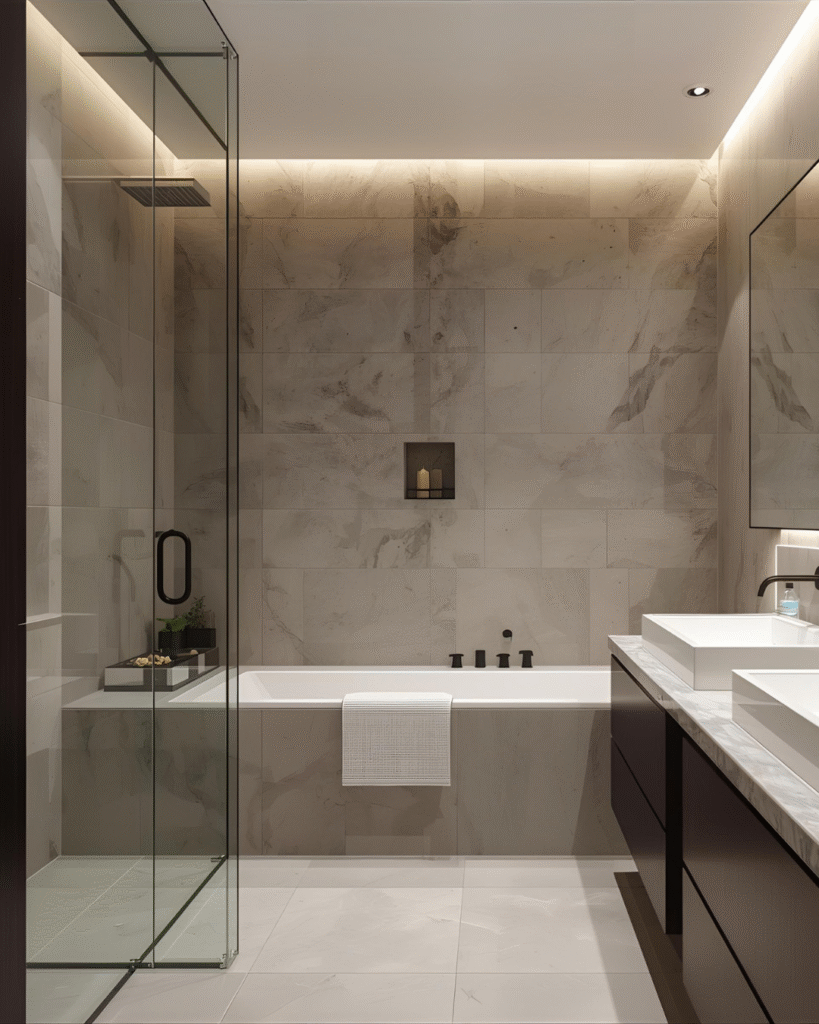
Sometimes the priority isn’t a new bedroom but an additional bathroom. A well-designed loft bathroom can serve existing bedrooms on the floor below, reducing morning queues and adding convenience. Compact layouts work well where headroom is limited.
Preserving Character in Period Conversions
Converting a Victorian or Edwardian loft doesn’t mean abandoning the property’s character. Thoughtful design can complement original features rather than jarring against them.
Exposed Brickwork
Many Canterbury period properties have chimney stacks passing through the loft. Rather than boxing these in, exposing the original brickwork creates an instant feature wall. Clean and seal the bricks, or limewash for a softer appearance.
Timber Features
Original roof timbers can become design features. Exposed purlins and rafters—properly treated and finished—add warmth and character. Where steel beams replace structural timbers, these too can be left exposed for an industrial-heritage aesthetic.
Period-Appropriate Windows
Velux and similar roof windows suit most conversions, but dormer windows offer more design choices. Sash-style windows in dormers can echo the property’s original fenestration, maintaining visual continuity from street level.
Flooring Choices
Wide-plank engineered oak flooring suits Victorian and Edwardian properties. It’s stable in the temperature variations common in roof spaces and complements period architecture better than laminate alternatives.
Planning Permission and Building Regulations
Permitted Development
Many loft conversions in Canterbury fall under permitted development rights, meaning no planning application is needed. However, permitted development has limits:
- Dormer volume restrictions (40 cubic metres for terraced houses, 50 cubic metres for detached and semis)
- No extension beyond the existing roof plane at the front
- Materials should match the existing property
- No raised platforms or balconies
Properties in Canterbury’s conservation areas face additional restrictions. The city centre, areas around the cathedral, and parts of St Dunstan’s and Westgate have conservation status affecting what’s permitted without formal planning consent.
Building Regulations
All loft conversions require building regulations approval regardless of planning status. This covers:
- Structural integrity of the floor and roof
- Fire safety including protected staircase, smoke alarms, and escape windows
- Thermal insulation to current standards
- Sound insulation between the loft and rooms below
- Safe staircase design with adequate headroom
Your local builder should handle building regulations applications as part of the project, arranging inspections at key stages.
Party Wall Considerations
Converting a loft in a terraced or semi-detached property often affects the party wall. You’ll need to serve notice on adjoining owners and may need a party wall agreement. This applies even where no planning permission is required.
Practical Considerations
Staircase Location
The staircase is often the trickiest element. It needs to rise from an existing landing or bedroom without making either floor impractical. Common solutions include:
- Extending over the existing stairwell
- Converting a small bedroom into a landing and staircase
- Positioning stairs over built-in wardrobes
- Spiral or space-saving staircases where standard options don’t fit
Headroom Requirements
Building regulations require minimum 1.9m headroom over the staircase and adequate standing height in habitable rooms. In practice, you want generous headroom where you’ll stand and walk, with lower areas used for beds, storage, and bathrooms.
Services
Water, heating, and electrics need extending to the loft. This typically means:
- Hot and cold water supplies for any bathroom
- Central heating extension or electric radiators
- Adequate electrical circuits for lighting, sockets, and any fixed appliances
- Consideration of boiler capacity if adding a bathroom
Insulation
Loft rooms sit directly under the roof covering, so insulation is critical for comfort and energy efficiency. Modern conversions should achieve high thermal performance, keeping the room warm in winter and preventing overheating in summer.
Working with Canterbury’s Conservation Areas
Canterbury has extensive conservation areas protecting the city’s historic character. If your property falls within one, additional considerations apply:
- Roof alterations visible from public spaces may need planning permission even where normally permitted development
- Dormer designs should complement existing roofscapes
- Materials should match or be sympathetic to the surrounding area
- Windows visible from the street may need to follow traditional proportions
Early consultation with Canterbury City Council’s planning department can clarify what’s achievable for your specific property.
Costs and Timescales
Loft conversion costs vary significantly based on conversion type, specification, and site-specific factors. As a rough guide for Canterbury:
- Velux conversion: Starting from around £30,000-£40,000
- Rear dormer conversion: Typically £45,000-£60,000
- Hip-to-gable plus dormer: Often £55,000-£75,000
- L-shaped dormer: Usually £50,000-£70,000
These figures include standard specifications. High-end finishes, complex structural work, or listed building requirements can increase costs substantially.
Timescales typically run from 8-12 weeks for straightforward Velux conversions to 12-16 weeks for larger dormer projects. Weather can affect progress, particularly during roofing work.
Choosing a Builder for Your Canterbury Loft Conversion
Period loft conversions need builders who understand older properties. Look for:
- Experience with Victorian and Edwardian homes specifically
- Knowledge of Canterbury’s planning environment and conservation requirements
- Willingness to handle building regulations and party wall matters
- Clear quotations detailing what’s included
- References from previous loft conversion clients
- Appropriate insurance and warranties
A good builder will survey your property thoroughly before quoting, identifying any issues that might affect the conversion and suggesting solutions. They should explain options clearly, helping you make informed decisions rather than pushing the most expensive solution.
Making the Most of Your Canterbury Period Home
Your Victorian or Edwardian house was built to last—many have stood for well over a century and will serve generations to come. A thoughtfully designed loft conversion adds living space while respecting the property’s character and heritage.
Whether you need a master suite to accommodate a growing family, a home office for remote working, or simply want to unlock your home’s potential, converting your loft offers genuine value. The generous roof spaces common in Canterbury’s period properties make conversions practical and rewarding.
The key is working with experienced builders who understand both the technical requirements and the aesthetic sensibilities of period property work. Get that right, and your new loft room will feel like it’s always been part of the house.
Looking for a loft conversion quote for your Canterbury period property? Contact us for a free survey and no-obligation estimate.